



Chikungunya, a mosquito-borne viral disease, has been rising in Kerala’s capital district. A report from Onmanorama on 14 August 2026 says that Vattiyoorkavu in Thiruvananthapuram has emerged as a hotbed of vector-borne diseases, with chikungunya, dengue and viral fever all reportedly increasing, and that the district health administration held a special review meeting at the Vattiyoorkavu Family Health Centre led by the district medical officer.
Case numbers come from other reports. One account says that Kerala reported 167 chikungunya cases in the period around August, 105 confirmed and 62 probable as of 4 August 2026, with most concentrated in Thiruvananthapuram city. Another report said the district had over 700 cases of dengue and 25 cases of chikungunya in August. These figures are from secondary summaries and differ in their dates and definitions, so they should be read as indicating the order of magnitude, not as an official count.
The health department’s response was to intensify area-specific measures. According to the Onmanorama report, the officials decided to treat Vazhottukonam as a key focus area, and the work is being done by the vector control unit, the public health wing of the Family Health Centre and ASHA workers. The district decided to take up prevention and control on a campaign mode for the next two weeks in the Vattiyoorkavu constituency.
The response also met criticism. The report says that health authorities were criticised for failing to adequately control the outbreak, and that residents said that the pace of source reduction and prevention was slow. Local people claimed that there had been insufficient action on water stagnation and on mosquito and fly control despite meetings and the distribution of leaflets. The officials were not directly quoted in the article.
Chikungunya is caused by a virus carried by Aedes mosquitoes, the same genus that spreads dengue, and so the control measures are largely the same: removing standing water, covering containers and avoiding mosquito bites. It typically causes fever and severe joint pain. The sources reviewed for this article do not describe the clinical details, and readers should consult a doctor for symptoms.
The disease is spreading elsewhere in the country as well. Delhi has recorded 29 cases of chikungunya in 2026, including two in October, according to the civic body’s report. A review by the European Centre for Disease Prevention and Control, cited in search results, said that 45,633 chikungunya cases had been reported in Asia in 2026, with India reporting the highest number in the region, though that figure is a regional total and the ECDC page should be checked for the latest numbers.
Why is Thiruvananthapuram affected? Local authorities pointed to the monsoon season as the expected driver, since rain creates the pools in which the mosquitoes breed. The monsoon effect is the same one behind rising dengue numbers, which are covered in other IndiaX24 reports. Dense urban neighbourhoods, with many small containers and drains, make source reduction difficult.
What should residents do? The advice from health authorities is to empty and clean containers, keep drains clear, use nets and repellents, and seek medical care for a persistent fever or severe joint pain. The district is running a campaign in the affected constituency, and residents can help by allowing health workers to inspect their premises.
The Vattiyoorkavu case shows how a local outbreak can become a test of a health system’s response. The next reports from the district will show whether the two-week campaign has reduced the spread.
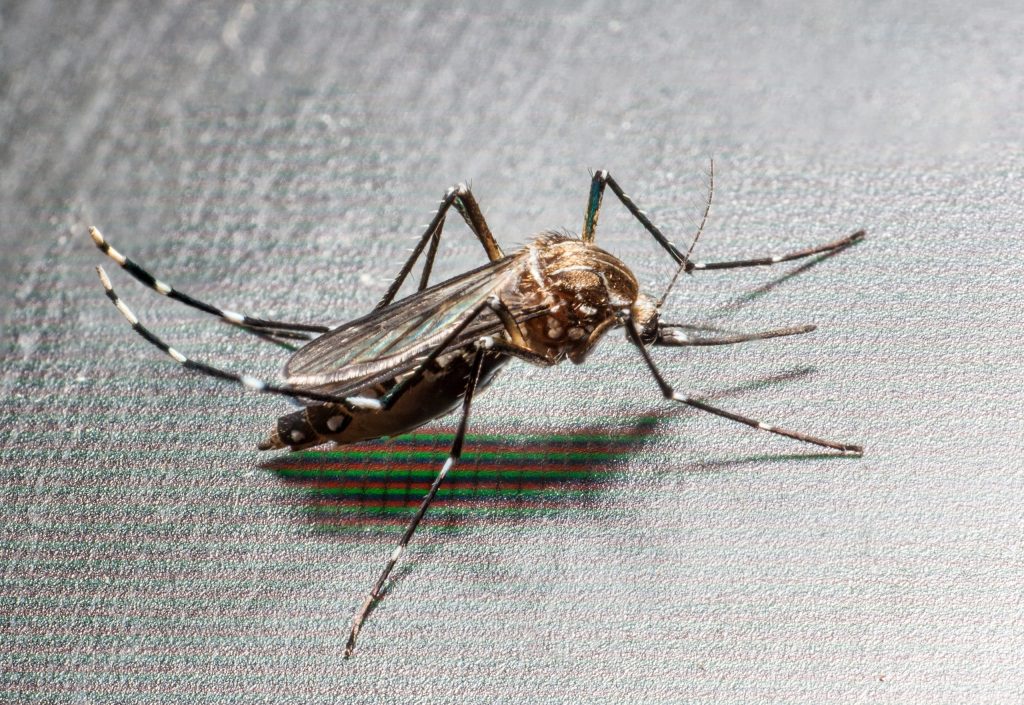
Featured image: An Aedes albopictus mosquito, one of the species that can spread chikungunya (file photo). Photo by Sixto Emmanuel Picones Puebla, licensed under CC BY-SA 4.0, via Wikimedia Commons.