


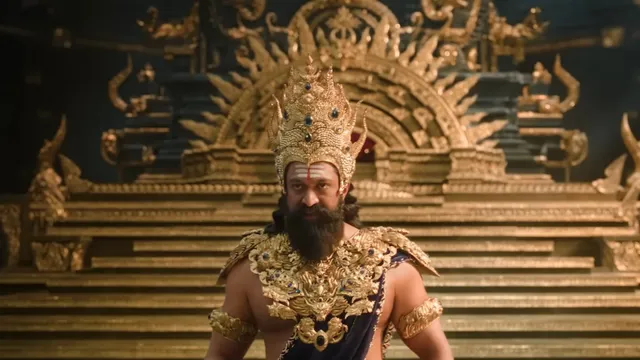
Nitesh Tiwari's two-part adaptation of the Ramayana opened in cinemas on Thursday, 5 November, with Ranbir Kapoor as Rama, Sai Pallavi as Sita, Yash as Ravana and Sunny Deol as Hanuman. The first part runs 195 minutes and is backed by the visual effects studio DNEG, with music by A.R. Rahman and Hans Zimmer's score felt in the battle scenes, according to The Hindu's review. Reviews published over the past two days agree on one point, which is that Ravana dominates this first part, and they differ on whether that is a strength or a weakness. The debate has also revived questions about whether Ranbir Kapoor suits the role of the idealist prince.
The argument that the film succeeds starts with Yash and with the scale of the spectacle. The Hindu's reviewer calls him the show-stealer who makes a menacing Hindi debut, with a performance of electrifying intensity, dubbed by Sharad Kelkar. The film humanises Ravana by tracing his devotion to Shiva, his birth from his mother Kaikesi, played by Shobana, and his rise from slave status, which gives the villain a fuller arc than earlier screen versions. The opening battle between gods and asuras is described as awe-inspiring, and the fight between Jatayu, voiced by Anupam Kher, and Ravana is praised for mixing action with emotion. Audiences turned up too, since Sacnilk figures reported by The Week put worldwide advance bookings at about ₹63.48 crore, of which India accounted for about ₹34.01 crore, and the Hindi version made up about 84 percent of domestic advance sales.
The argument against is that the focus on Ravana comes at Rama's expense, and that the film rushes the human story at its core. The same review says Rama's youth under sage Vishwamitra, the lifting of Shiva's bow and the acceptance of a 14-year exile feel hurried, leaving him a character who is already morally complete, and that the shift to the domestic drama in Ayodhya causes tonal whiplash. It notes that the Kevat episode, which carries a message beyond class and caste, is skipped, and that the music feels like a polished technical exercise rather than an emotional anchor. Another Hindu piece records that doubts about Ranbir Kapoor's casting persisted after release, with some viewers saying he did not fit the role, although that article argues his earnest appeal gives Rama new life. Since this is only Part 1, the balance may change when the second part arrives.
The film matters because it is an ambitious attempt to take an Indian epic to a global audience, and its reception will shape how studios treat mythological stories. A strong run would encourage more large-scale adaptations built on international visual effects, and it would show that a Hindi film with a Kannada star as its villain can draw viewers across languages. A weak response would warn producers that scale cannot replace emotional depth, which is the complaint critics make about this first part.
Ramayana: Part 1 has won praise for its villain, its battles and its ambition, and has drawn criticism for how it treats its hero. The verdict on Ranbir Kapoor's Rama is likely to wait until the second part.