


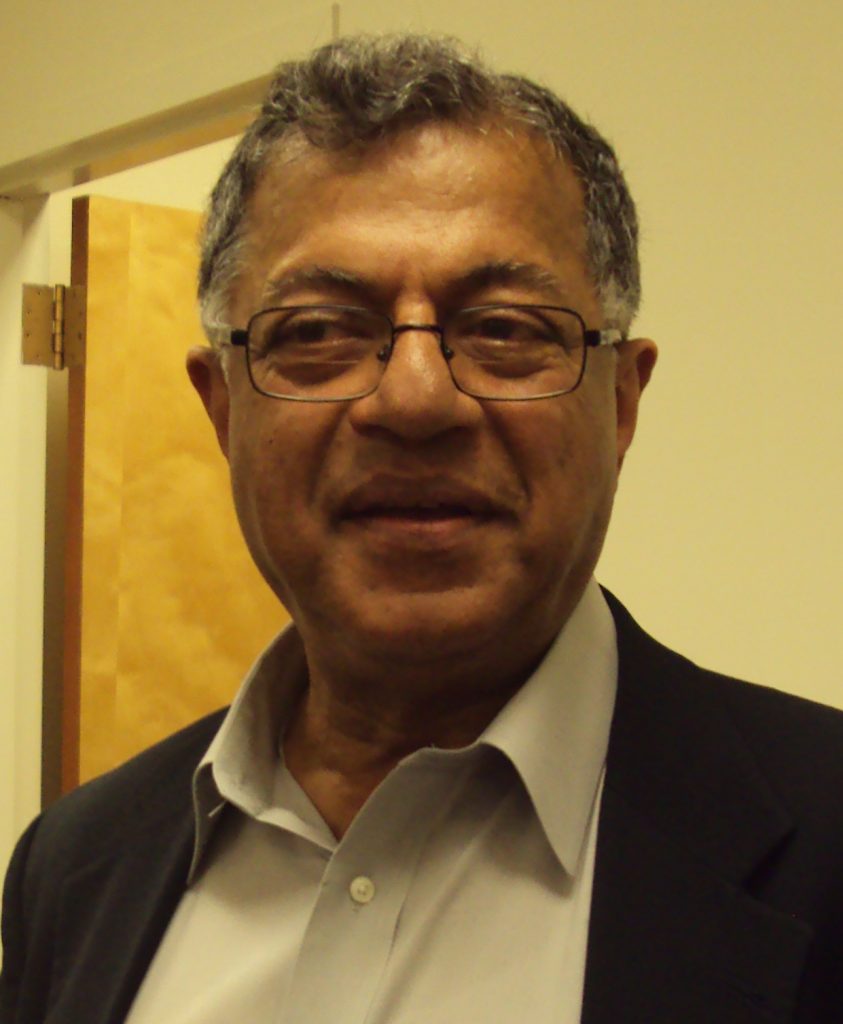

Girish Raghunath Karnad (19 May 1938 – 10 June 2019) was an Indian playwright, actor and film director who wrote in Kannada. His plays, which use history and myth to look at the present, among them Tughlaq, Hayavadana and Naga-Mandala, made him one of the makers of modern Indian theatre. Millions also knew him as an actor in films and television. He received the Jnanpith Award in 1998.
Quick Facts
| Full name | Girish Raghunath Karnad |
| Born | 19 May 1938, Matheran, Bombay Presidency |
| Died | 10 June 2019, Bengaluru (aged 81) |
| Language | Kannada (also translated his own plays into English) |
| Occupation | Playwright, actor, film director |
| Education | Karnatak University, Dharwad; Magdalen College, Oxford (Rhodes Scholar) |
| Notable plays | Yayati, Tughlaq, Hayavadana, Naga-Mandala, Tale-Danda, The Fire and the Rain |
| Awards | Jnanpith Award (1998), Padma Shri (1974), Padma Bhushan (1992) |
| Spouse | Saraswathy Ganapathy (m. 1980) |
| Children | 2 |
Early Life
He was born at Matheran, near Bombay, into a Konkani-speaking Saraswat Brahmin family. His father was a doctor in government service; his mother, a widow with a child, had married him after years of waiting, a story Karnad told in his memoirs. He grew up at Sirsi in the forests of north Karnataka, where travelling theatre companies and Yakshagana troupes performed, and later at Dharwad.
Education
He graduated in mathematics and statistics from Karnatak University in 1958 and won a Rhodes Scholarship to Oxford, where he read philosophy, politics and economics at Magdalen College and was elected President of the Oxford Union. He had meant to become a poet in English. On the eve of leaving for England he found himself writing a play in Kannada.
Career
Plays
- Yayati (1961), from an episode in the Mahabharata, written when he was twenty-two
- Tughlaq (1964), about the brilliant and disastrous fourteenth-century sultan, read as a comment on the disillusion of the Nehru years. Ebrahim Alkazi’s production at the Purana Qila in Delhi became famous.
- Hayavadana (1971), based on a tale of transposed heads and using the forms of folk theatre
- Naga-Mandala (1988), from two Kannada folk tales
- Tale-Danda (1990), on the twelfth-century reformer Basavanna
- The Fire and the Rain (1995), The Dreams of Tipu Sultan and, last, Rakshasa Tangadi (2018), on the fall of Vijayanagara
He worked for Oxford University Press in Madras from 1963 to 1970, then gave up the job to write.
Films
He wrote the screenplay of Samskara (1970), from the novel by U. R. Ananthamurthy, and played the lead. He directed Vamsha Vriksha (1971, with B. V. Karanth), Kaadu, Ondanondu Kaladalli and the Hindi film Utsav (1984). As an actor he appeared in Shyam Benegal’s Nishant and Manthan, in Swami, as the father in the television series Malgudi Days, and late in life in popular Hindi films such as Iqbal and Ek Tha Tiger.
Institutions
He was director of the Film and Television Institute of India in 1974–75, chairman of the Sangeet Natak Akademi from 1988 to 1993, and director of the Nehru Centre in London from 2000 to 2003.
Public Life
He spoke out against religious fundamentalism, censorship and attacks on writers, and was named on the hit list of the group accused of murdering the journalist Gauri Lankesh. In 2018, though ill and breathing through a tube, he attended a memorial meeting for her wearing a placard that read “Me Too Urban Naxal”.
Personal Life
He married Dr Saraswathy Ganapathy in 1980. They had a daughter, Shalmali Radha, and a son, Raghu. He died in Bengaluru in 2019 and, by his own wish, was cremated without ceremony or state honours.
Featured image: Girish Karnad at a film screening at Cornell University, May 2010. Photo by Srtejaswi at English Wikipedia, licensed under GFDL, via Wikimedia Commons.