


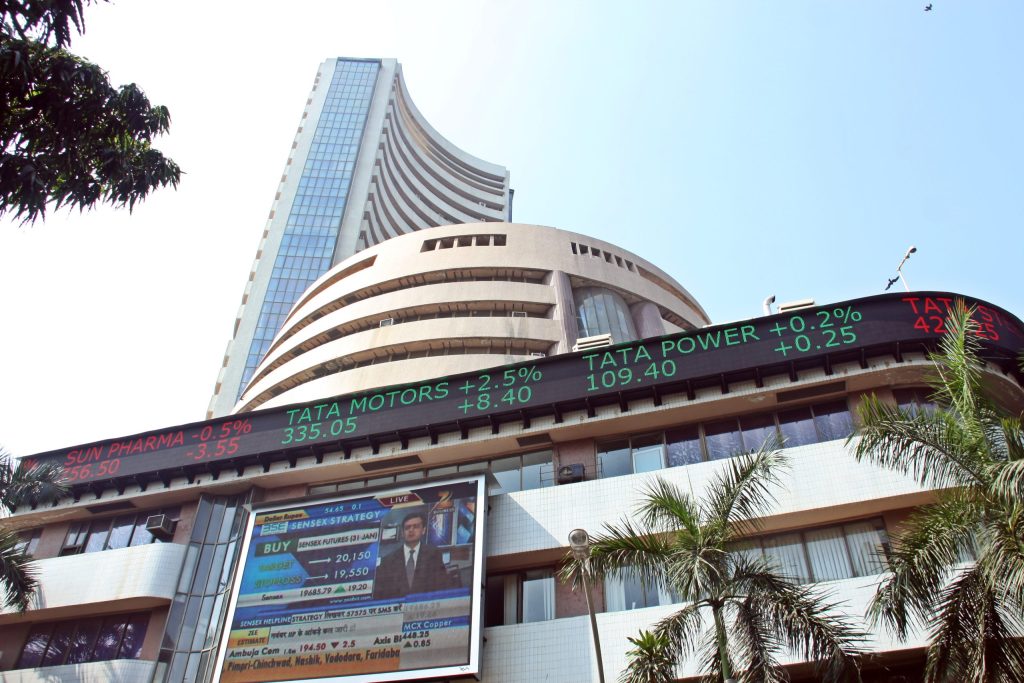

Indian equity benchmarks ended lower on 14 October 2026. The BSE Sensex fell 251.89 points, or 0.34%, to close at 72,781.89, and the NSE Nifty 50 fell 99.25 points, or 0.44%, to 22,622.70, according to market close reports. The previous close was 73,033.78 for the Sensex and 22,721.95 for the Nifty.
Two forces weighed on sentiment. Crude oil prices climbed towards $107 a barrel on tensions in the Middle East, and foreign portfolio investors continued to sell Indian shares. Reports said foreign investors sold shares worth Rs 1,305 crore on Tuesday, 13 October, which extended a run of 13 consecutive selling sessions and brought outflows so far this year to $32.52 billion. Domestic institutions bought shares worth Rs 2,439 crore on the same day and provided a cushion.
The leaders on the Nifty were Bharti Airtel, which gained 3.96% to Rs 1,865.70, Tech Mahindra, up 3.66% to Rs 1,632.80, and HCL Technologies, up 3.26% to Rs 1,370.30. The biggest losers were Trent, down 1.08% to Rs 2,939, Nestle India, down 0.78% to Rs 1,372.40, and Adani Enterprises, down 0.71% to Rs 2,703.20. An earlier report listed Shriram Finance, HDFC Life Insurance and Bajaj Finance among the weakest large stocks at one point, which shows that the ranking changed during the session.
Information technology was the bright spot. The Nifty IT index extended its recovery after a sharp rise of 5.2% on Tuesday. Tata Elxsi rose 5.7% during the session. By contrast, auto, metal, pharma, realty and private bank stocks fell between 0.5% and 1.7%, while energy, oil and gas, media and FMCG stocks rose by about 0.5% to 1%.
Breadth was mildly positive on the NSE in one report, with 2,351 advances against 1,694 declines and 129 unchanged, although another report at an earlier time showed more decliners than advancers, which reflects intraday changes. Mid-cap and small-cap indices were also lower: the Nifty Midcap 100 fell 0.08% and the Nifty Smallcap fell 0.32%.
The context for these moves is a week in which the Reserve Bank of India raised the repo rate to 5.50%, retail inflation rose to 5.54% and wholesale inflation to 11.39%. Those readings add to the cost of funds and inputs for companies and explain why investors are cautious about rate-sensitive stocks such as banks and finance companies.
The rupee was a further factor. It closed at about 95.17 against the dollar on 14 October after the RBI stepped in with measures to curb speculation in the currency market. A weaker rupee reduces the dollar value of Indian equity returns for foreign investors, which is one reason they have continued to sell.
Analysts quoted in market reports described the near-term outlook as constructive but vulnerable to volatility, and pointed to domestic institutional buying as the main support in a market that has seen heavy foreign selling. That view reflects how local mutual funds and insurers have been absorbing foreign supply.
Readers should note that these are a single day’s figures, and that markets move daily. The numbers here are from market close reports and may differ slightly from final exchange data.
For investors, the key questions are whether foreign selling slows, whether crude prices ease and whether the central bank’s steps stabilise the rupee. The answers to those will matter more for the next few weeks than any single day’s move.
Featured image: The BSE building on Dalal Street, Mumbai (file photo). Photo by BSEINDIA, licensed under CC BY-SA 3.0, via Wikimedia Commons.