


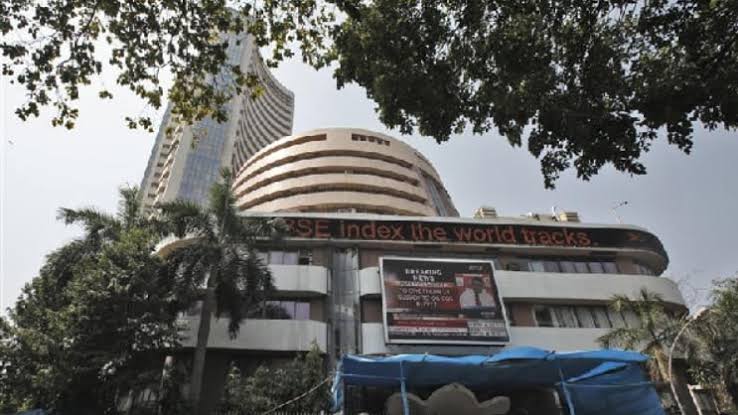
Indian equity markets ended sharply higher on Friday, November 20, 2026, bucking a weak trend across global markets. The 30-share BSE Sensex rose 897.96 points, or 1.08 percent, to settle at 83,919.71, while the 50-share NSE Nifty gained 286.30 points, or 1.12 percent, to end at 25,800.60. According to The Hindu's market report, the rally was driven by buying in bank stocks, uninterrupted foreign fund inflows and a moderation in crude oil prices. It was the second straight day of gains.
The size of the move stands out most against what happened abroad. In Asia, South Korea's Kospi tumbled 5.21 percent and Japan's Nikkei 225 fell 5.06 percent, while Hong Kong's Hang Seng lost 1.89 percent and Shanghai's SSE Composite declined 1.22 percent. European markets were also trading lower. On Wall Street, the Nasdaq Composite dropped 2.25 percent on Thursday, the Dow Jones Industrial Average fell 2.19 percent and the S&P 500 lost 2.02 percent. In a week when the world's major indices were falling sharply, a one percent gain in Mumbai is an unusual sight, and it invites the obvious question of why Indian stocks moved the other way.
The reported explanation has three parts. The first is the banks. Within the Sensex pack, Kotak Mahindra Bank climbed 3.08 percent, HDFC Bank 3.02 percent and ICICI Bank 2.22 percent. Maruti rose 2.88 percent, UltraTech Cement 2.75 percent and Bajaj Finance 2.47 percent. Because banks carry heavy weights in the index, gains of two to three percent in several large lenders can move the whole benchmark by hundreds of points. Titan, Tata Steel, NTPC and Hindustan Unilever were among the laggards, which shows that the rally was not a uniform one but a sector-led push.
The second part is foreign money. Foreign Institutional Investors bought equities worth ₹7,411.41 crore on Thursday, November 19, according to exchange data. That is a large single-day figure, and it fits a broader pattern that The Hindu documented in its report on the rupee. Foreign portfolio investors put ₹84,290 crore into Indian equities over nine trading sessions from November 2 to 13, a strong comeback after two consecutive months of net outflows, according to depository data. The earlier outflows had been heavy: ₹34,843 crore was withdrawn in October and ₹35,861 crore in September. With the latest inflows, cumulative FPI outflows from Indian equities for 2026 have narrowed to around ₹2.1 lakh crore, from nearly ₹3 lakh crore a few weeks ago.
The third part is oil. Brent crude, the global benchmark, declined 1.89 percent to $90.24 a barrel, according to the market report. For India, which imports most of the crude it consumes, a lower oil price eases the import bill, helps the currency and supports the outlook for inflation and company margins. A price of about $90 is still high by historical standards, so the relief is relative, but the direction of travel matters to investors as much as the level.
The month's performance puts Friday's gain in perspective. So far in November, the Sensex has gained 9,460.18 points, or 12.70 percent, and the Nifty has climbed 2,747.5 points, or 11.91 percent. Those are very large moves for a single month, and they come after weeks in which foreign investors had been net sellers. The previous session had also been strong: the Sensex jumped 989.94 points, or 1.21 percent, to close at 83,021.75, and the Nifty climbed 286.35 points, or 1.14 percent, to end at 25,514.30. In other words, the market has added close to 1,900 Sensex points in two days.
The rupee tells the same story from the currency side. The Indian unit extended its gains for the fifth consecutive session on Friday, settling 65 paise higher at 92.67 against the U.S. dollar in provisional trade. The Hindu's headline describes the rupee as "above the 93 level" for the first time in over seven months, which means the currency is now stronger than 93 to the dollar. At the interbank foreign exchange, the rupee opened at 93.25 and touched an intraday high of 92.65, its strongest since April 10, when it had closed at 92.83. On Thursday it had settled nine paise higher at 93.32. Since the close of 94.19 on November 13, the rupee has appreciated by more than 1.6 percent over five back-to-back sessions.
Forex analysts quoted in the report attributed the strength to foreign institutional investors' "unabated chase for higher returns" amid a weaker American currency and waning AI-related stock rallies in the United States and in markets such as Taiwan and South Korea. The last part of that explanation is interesting because it hints at where some of the money may be coming from. If investors are growing cautious about technology stocks that have run up on artificial intelligence expectations, some of that capital can look for alternatives in other markets, and India has been one of those beneficiaries in the past few weeks. That is an interpretation offered by analysts, and it should be treated as an explanation of flows rather than a guarantee of what comes next.
Anuj Choudhary, research analyst at Mirae Asset Sharekhan, said the rupee rose sharply on a surge in the domestic market and fresh foreign inflows, helped by an overnight fall in commodity prices, though a strong dollar capped sharper gains. "We expect the rupee to trade with a positive bias on strength in the domestic markets and sustained foreign inflows," he said, adding that falling crude and other commodity prices may ease import bills. He expected the USD-INR spot price to trade in a range of ₹92.40 to ₹93, and said traders may take cues from revised consumer sentiment data from the United States. The dollar index, which measures the greenback against a basket of six currencies, was at 103.87, lower by 0.08 percent.
What does all this mean for an ordinary investor or household? A stronger rupee makes imports such as fuel, electronics and foreign education cheaper in rupee terms, and it can reduce pressure on inflation. It is less welcome for exporters, whose dollar earnings buy fewer rupees. A rising equity market improves the value of mutual fund and pension portfolios, and it can improve sentiment, though it does not by itself change the daily cost of living. The month's rally also reminds investors how quickly flows can turn: the same foreign investors who pulled out ₹34,843 crore in October put in ₹84,290 crore in nine sessions in November.
It is worth being careful about what a day's performance can and cannot prove. The reasons given for the rally are the reported ones, and market moves can have many causes that analysts only identify afterward. The global weakness was severe, with Asian benchmarks down by more than five percent in two cases, and India's insulation from it will be tested if the sell-off continues. A market that has risen nearly 13 percent in a month is also vulnerable to profit-taking, which was visible earlier in the day when The Hindu reported that indices fell in early trade amid profit-taking and weak global trends before recovering to close sharply higher.
For policymakers, the combination of lower crude, a firmer rupee and renewed foreign inflows is a welcome change after a stretch of net selling. For investors, the lesson of the past few weeks is the familiar one that foreign flows and oil prices move Indian markets as much as domestic news does. The sustained strength of bank stocks on Friday suggests that confidence in the financial sector remains an anchor for the index.
Looking ahead, the factors to watch are clear from the day's reports: whether foreign inflows continue at their recent pace, whether crude stays below $91, how the dollar behaves, and how Asian and Wall Street markets settle after their steep declines. If those hold, the rupee and the Sensex may keep their momentum. If they turn, the day's gains could prove short-lived. For now, the verified picture is one of a market that stood firm while much of the world fell, and a currency that has climbed to its strongest level in over seven months.