



The Indian rupee was quoted at 94.79 against the US dollar on Friday, 16 October 2026, supported by intervention from the Reserve Bank of India, according to a market report that IndiaX24 reviewed. The report said the currency had appreciated by 0.20 on the day, but it did not say whether that was 0.20 rupee or 0.20 per cent, so IndiaX24 reports only the level and the direction.
The pressure on the currency has come from foreign investors. Foreign institutional investors sold Indian equities worth Rs 5,285.37 crore on Wednesday, 14 October 2026, according to the same report. At a rate of 94.79 to the dollar, that is about 558 million dollars, a conversion by IndiaX24 and an approximation because the rate changes through the day.
The size of the outflow can be put in context with the gold import figures that IndiaX24 has reported. India’s gold imports fell 81 per cent to 1.8 billion dollars in September, and its exports jumped 23 per cent to 44.4 billion dollars, as reported in earlier articles. One day of equity selling at about 558 million dollars was therefore equivalent to roughly 31 per cent of September’s gold import bill, a ratio calculated by IndiaX24 from the two figures.
The rupee at 94.79 means that one dollar costs nearly 95 rupees. Put the other way, one rupee buys about 1.05 US cents, which is IndiaX24’s division of one by 94.79. Each Rs 1 crore is therefore about 105,500 dollars at this rate, again an approximation by IndiaX24.
The oil price adds to the pressure. Crude near 105 dollars a barrel, as noted in the market close report, raises India’s import bill and the demand for dollars. India imports most of the crude oil it uses, which is general background, and a higher oil price therefore tends to weaken the rupee unless it is offset by capital inflows. The reports reviewed do not link the day’s move directly to oil.
The Reserve Bank’s role is to limit sharp moves. The report credits RBI intervention for supporting the currency but does not say how much the central bank sold. Such operations draw on the foreign-exchange reserves, and the reports reviewed do not give the latest reserve figure, so IndiaX24 does not quote one.
US interest rates are an important driver. The gold market reports of the week said that a hotter US inflation reading had raised expectations of a Federal Reserve rate hike and that ten-year Treasury yields were near two-decade highs, as IndiaX24 reports in a separate article on the gold price. Higher US yields make dollar assets more attractive and can draw money out of emerging markets, which is a general effect and not a finding of the reports.
On the day, softer US Treasury yields helped Indian stocks, with the Sensex and Nifty gaining for a second session, as IndiaX24 reports. A gain in equities with a steady rupee suggests that the selling pressure eased on Friday, although one day does not establish a trend, and the reports reviewed do not give Friday’s foreign flows.
What the data do not show is the rupee’s position over a longer period. The reports reviewed give no figure for where the currency stood a month or a year ago, so IndiaX24 does not describe it as a record low or as a gain over any period.
Importers, students paying fees abroad and companies with dollar debt are the groups most exposed to a weaker rupee, while exporters benefit, which is general background. India’s exports jumped 23 per cent in September, according to IndiaX24’s earlier report, but the reports reviewed do not link that to the exchange rate.
IndiaX24 will report the rupee and foreign flows when the data for Friday are published.
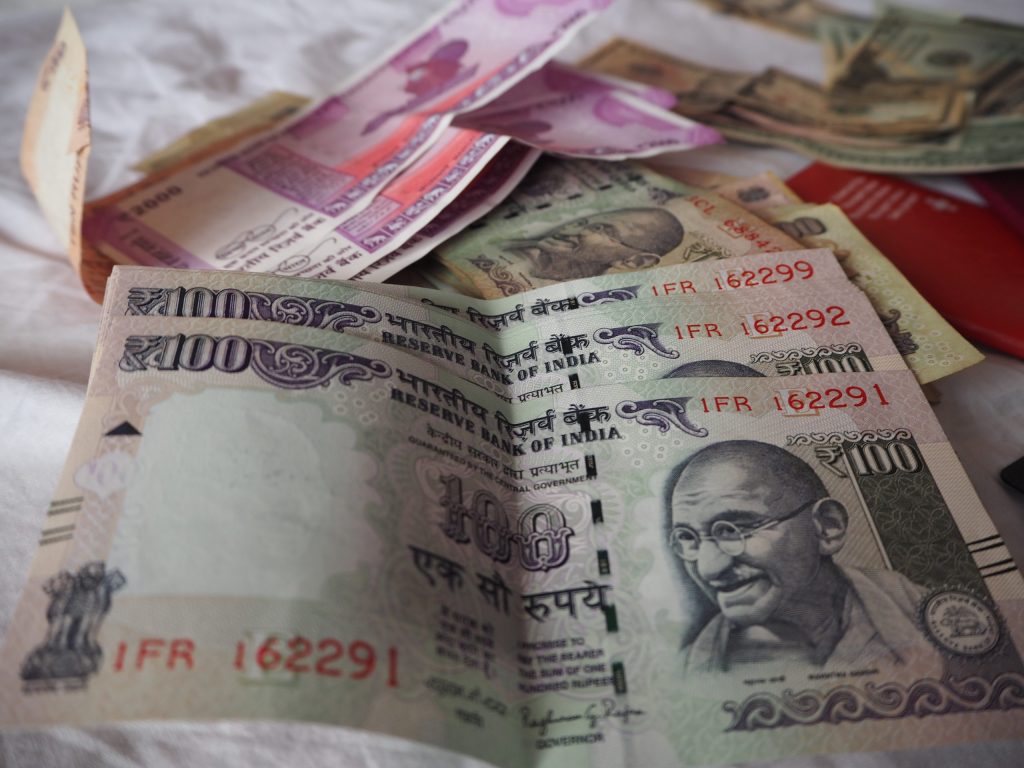
Image: Indian rupee banknotes (file photo; a stand-in image). Photo by Monito – Money Transfer Comparison, licensed under CC BY 2.0, via Wikimedia Commons.