


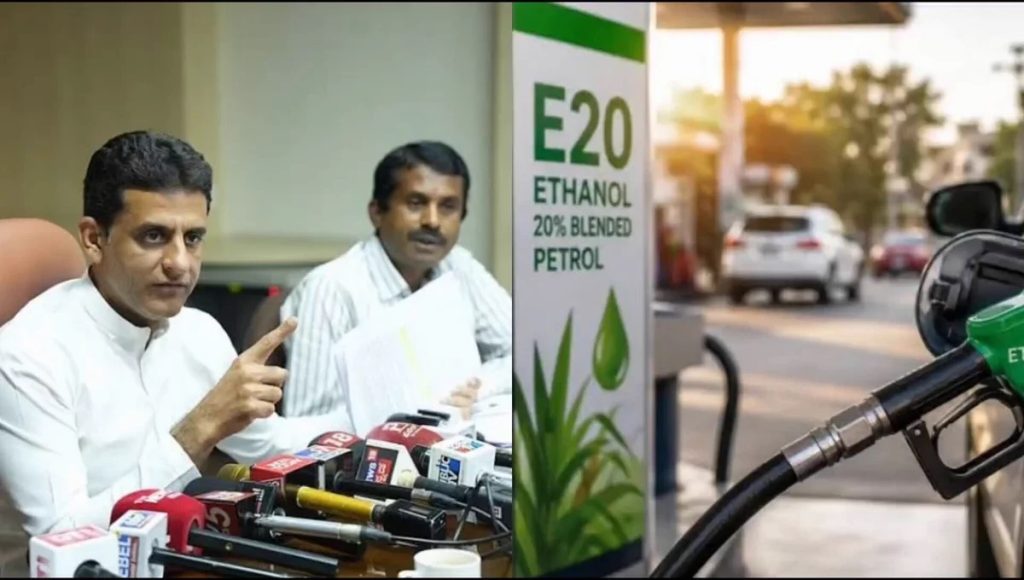
A row over the quality of E20 petrol escalated on Saturday, 7 November 2026, after the three state-run oil marketing companies rejected Karnataka's claim that petrol sold in the state contained as much as 31.2 percent ethanol. Karnataka's Food and Civil Supplies Minister Rizwan Arshad announced the findings on Friday, and Congress leader Rahul Gandhi then accused the Centre of "stealing petrol from the public's cars." The dispute matters because E20 is sold across the country, and the Bureau of Indian Standards specification, IS 17021, allows an ethanol content of only 19 to 21 percent.
The state's case rests on its testing. According to Arshad, Karnataka collected 63 petrol samples from seven districts after the oil companies did not provide details of the ethanol content, and had them tested at the Shriram Research Institute in Bengaluru, an accredited laboratory. The results listed 31.2 percent for an Indian Oil sample, 30.5 percent for HPCL, 27 percent for another HPCL sample, 26.5 percent for BPCL, 26.1 percent for Nayara and 25.5 percent for Shell. Of the 14 results the government listed, 11 were above 20 percent, as Rahul Gandhi pointed out. The state also says the in-house laboratory reports of IOC and BPCL did not disclose ethanol content even though it is a prescribed testing parameter, and it wants action against the companies, compensation for motorists and mandatory display of ethanol content at pumps.
The oil companies argue that the numbers cannot be trusted. In a joint statement, IOC, BPCL and HPCL said the tests were not conducted in accordance with the prescribed statutory and technical procedure, and that the certificates do not specify the standard test method, the dilution procedure or the reference material, so the 26 to 31 percent figures cannot be validated against IS 17021. They also noted that ethanol is denser than petrol, so a blend that rich should have shown a higher density, and they said the densities reported for the samples did not fit that pattern. Their own tests of 56 samples from across Karnataka conformed to specifications, with an average ethanol content of 19.3 percent. The companies have asked for the full sampling documents, outlet-wise laboratory reports and samples for retesting, and have offered joint sampling.
The stakes extend beyond one state. The Union government says its Ethanol Blended Petrol Programme has saved more than ₹1.97 lakh crore in foreign exchange, replaced about 316 lakh metric tonnes of crude oil imports and paid more than ₹1.66 lakh crore to farmers and distillers, and it puts any loss of fuel economy in certain vehicles designed for E10 at about 3 to 5 percent. Karnataka has claimed a 10 percent mileage loss and a ₹62,000 crore burden on consumers, a figure the companies want tested against real vehicle data. Rahul Gandhi has also asked why pumps carry no label showing ethanol content, and repeated his challenge to Prime Minister Narendra Modi for an open debate.
The disagreement is now about method as much as fuel. A joint sampling exercise under the Control Order and the Marketing Discipline Guidelines, 2024, would let both sides test the same fuel, and its results will decide whether this was over-blending or a flawed test.