


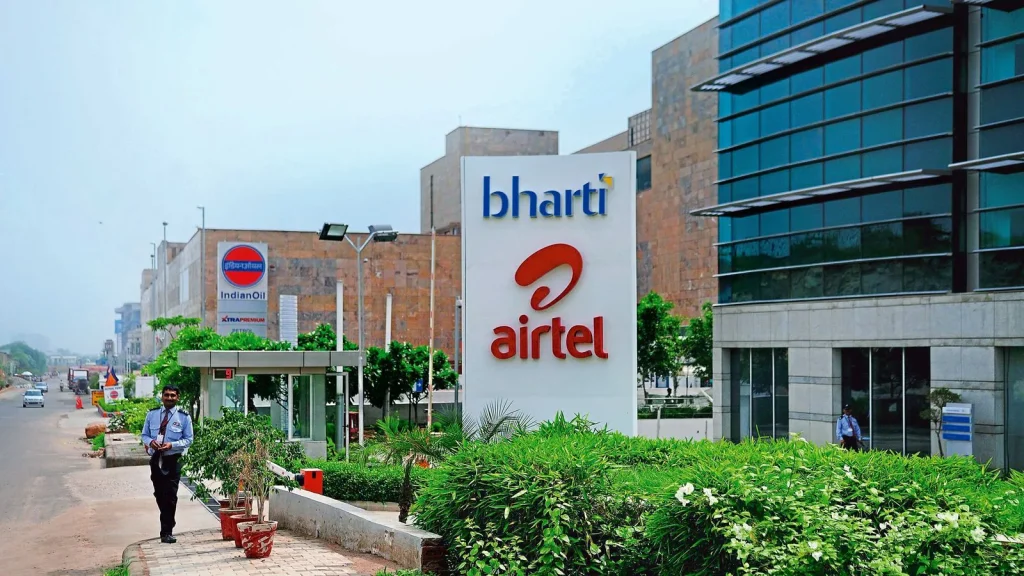
Bharti Airtel reported a 24 percent increase in consolidated profit to ₹10,710 crore for the second quarter ended September 2026, the company said in a regulatory filing on Thursday, 5 November. The telecom operator had earned ₹8,651 crore in the same quarter a year ago, and it credited the gain to higher revenue per user after a rejig in mobile phone tariffs. Consolidated revenue from operations rose 16.7 percent to ₹60,877.5 crore from ₹52,145.4 crore, while India revenue grew 9.4 percent to ₹42,308 crore. The numbers have drawn attention because Airtel is one of the three large private operators that serve most of the country's mobile users.
The argument that this was a strong quarter rests on pricing power and a better mix of customers. Average revenue per user rose to ₹271 from ₹256 a year earlier, a gain of about 5.9 percent, and India mobile service revenue grew 10.1 percent. Executive vice-chairman Gopal Vittal said postpaid customers rose by a record 12 lakh in the quarter to reach 3.12 crore, and the company added 29 lakh smartphone data customers. Data use per customer climbed 28.8 percent to 36.5 GB a month, which shows that users are paying more and also consuming more. The balance sheet also improved, since net debt fell about 14 percent to ₹1.66 lakh crore from ₹1.94 lakh crore a year ago, which gives the company room to keep investing.
The case for caution is that much of the growth came from charging existing customers more and from outside India, and not from a wider customer base. India revenue grew 9.4 percent, well below the 16.7 percent growth in consolidated revenue, and the mobile customer base in India rose only 3.6 percent to 37.72 crore. Average revenue per user rose about 5.9 percent while data use per customer rose 28.8 percent, so customers are getting far more data for each rupee, and further tariff increases will be needed to keep margins growing. The company also spent ₹12,467 crore on capital expenditure in the quarter, including ₹9,908 crore in India, and put ₹2,826 crore into land for data centres, which means future profit depends on those bets paying off. Sequential growth in India revenue was a modest 2.7 percent.
The result matters well beyond Airtel's shareholders. A telecom sector that earns healthy profits can afford to build towers, fibre and 5G coverage, and the company said it added 497 towers and 11,684 mobile broadband base stations in the quarter and 44,718 km of fibre over the past year. For consumers, the same strength shows up as higher monthly bills, since the profit gain was credited to the tariff rejig. For the country, a financially stable private operator reduces the risk of a weak network at a time when payments, banking and government services depend on mobile data.
Airtel has shown that premium customers and higher tariffs can lift profit even when the customer base grows slowly. The next few quarters will show whether it can add more subscribers, or whether further growth must again come from higher prices.