



Artificial intelligence could add up to 0.9 percentage points to India’s annual GDP growth, according to Tom Orlik, chief economist at Bloomberg Economics, in an interview published by Business Standard on 14 October 2026. The estimate depends on how AI is used: the larger gain comes if it helps workers do more rather than replacing them.
Orlik’s argument has two parts. If AI mainly augments labour, allowing people to keep their jobs while becoming more productive, then output per worker rises and the gain could be as large as 0.9 percentage points a year. If AI replaces workers, productivity may still rise, but jobs are lost and the gains tend to go to business owners and early investors rather than being spread widely.
He also gave a time frame. According to the summary, economy-wide gains require AI to be embedded in business processes and enterprise systems, which takes years rather than days or months, and he suggests three to five years before productivity gains appear, not one or two. The headline of the interview says that gains may translate into income growth in about five years.
Why might India be well placed? Orlik points to the country’s IT services companies, which have long experience of integrating new technology into the systems of big businesses. That expertise is the kind needed to deploy AI at scale inside banks, retailers and manufacturers. The sector is already showing the effect. TCS reported on 8 October that its annualised AI services revenue reached $3.1 billion, up from $2.6 billion in the previous quarter, and more than 10% of its total revenue.
This shows how the argument looks from the supplier side. The Indian IT firms are selling AI work to clients abroad, which raises their revenue, but the national productivity effect that Orlik describes would come from AI being used across the economy, including in sectors that have not yet adopted it. The two effects are related but are not the same.
The numbers are an estimate and not a forecast of what will happen. The figure of 0.9 points is an upper bound that depends on the augmentation scenario, and the time frame is several years. Other forecasts, including the International Monetary Fund’s 7.0% for FY27 and FY28, do not depend on this effect, so any AI gain would be on top of existing expectations only if it materialises.
There are risks on the other side. The labour market in India is large and young, and the effect of automation on jobs in services is a concern for policymakers. The same technology that raises productivity can reduce demand for entry-level tasks. Orlik’s distinction between augmenting and replacing captures that tension, though it does not say which outcome is more likely.
For readers, the key takeaway is conditional. If companies use AI to make their workers more productive and the benefits are shared, India could see faster growth than it otherwise would, but only after several years of investment in systems, skills and processes.
Whether that happens will depend on decisions that businesses, workers and governments make over the next few years, and the 0.9 figure is best read as a measure of the potential, not a prediction.
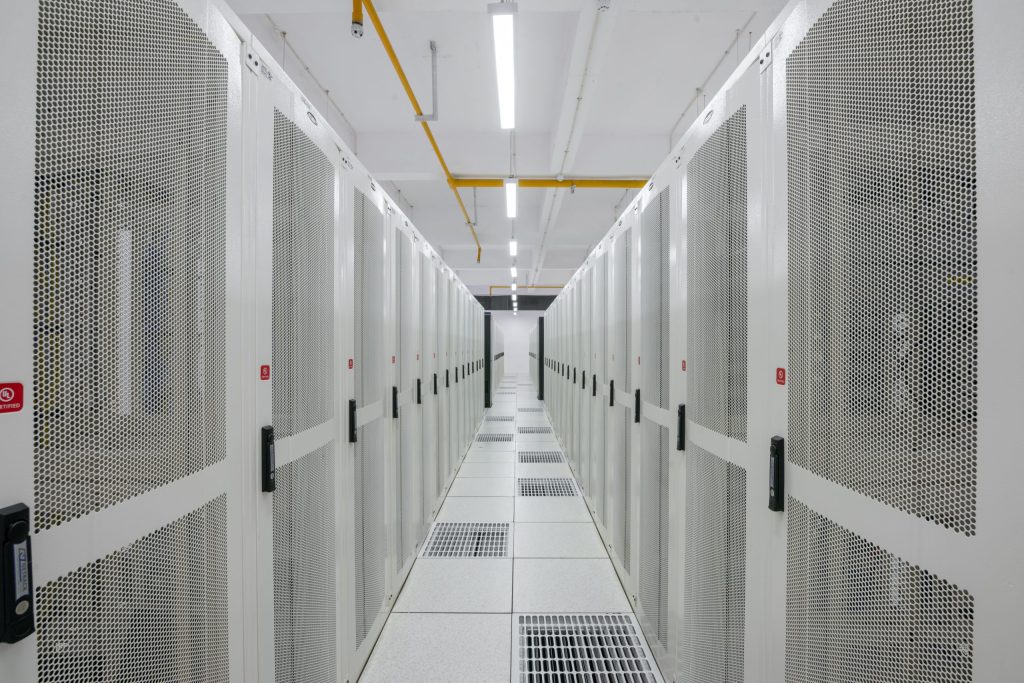
Featured image: Server racks in a data centre (file photo; a stand-in image for AI infrastructure). Photo by PiDatacenters, licensed under CC BY-SA 4.0, via Wikimedia Commons.